
Microcement vs tiles
Tiles mean grout lines to scrub, and replacing them means weeks of mess. Microcement gives you one seamless, hard-wearing surface across floors, walls and showers, often laid straight over the tiles you already have, in a matter of days.
Need advice?01472 240 340
Request a quote
The short answer
Microcement is usually the better choice if you want one seamless surface with no grout to clean, or want to cover existing tiles without ripping them out. With ErreLAB, microcement goes straight over well-bonded tiles in 4–5 days.
Tiles are laid as separate pieces with grout between them. Microcement is trowelled by hand in thin layers, about 2–3 mm in total, to make one continuous surface with no grout lines.
At a glance
- Microcement
- About 2–3 mm, seamless
- Tiles
- Separate pieces with grout lines
- Over old tiles
- Yes, with ErreLAB, once prepared
- Cleaning
- No grout lines to clean
Is microcement better than tiles?
If you want a clean, seamless finish with no grout to look after, we think so. Here’s what microcement gives you that tiles can’t.
The tile problems microcement avoids
Tiles are a familiar choice, but they come with problems that a seamless surface simply doesn’t have.
Is microcement cheaper than tiles?
Usually not. Microcement generally costs more upfront than a standard tile, because it’s a hand-applied, multi-coat finish that takes real skill to lay. Natural stone and designer tiles can match it or cost more, and the gap can close once you count complicated tile cuts or the cost of stripping out old tiles.
What you’re paying for is one seamless, hard-wearing surface with no grout to scrub or redo. Going over well-bonded tiles with ErreLAB can also save the strip-out, the skip and the making good.
Microcement cost also depends on which system you choose, so there’s no single price per m². Here’s what moves the price on each side:
| What changes the price | Microcement | Tiles |
|---|---|---|
| Materials | Depends on the system: Politura microcement, ErreFast or ErreLAB | Varies widely with the tile, adhesive and grout |
| Old tiles | ErreLAB can go over well-bonded tiles, so there’s no strip-out | Usually come off first, with waste to clear |
| Preparation | Tiles are cleaned and sanded, lippage levelled, joints filled and mesh or carbon fibre added | A flat, sound background, which may need making good after a strip-out |
| Labour | A skilled, hand-applied finish over 2–5 days, depending on the system | Depends on tile size, layout and cuts |
| Upkeep | No grout to clean or redo | Grout needs cleaning, and redoing over time |
Send us the size of your space and what’s on the walls and floor now, and we’ll give you a price for the right system.
Our pick for replacing tiles: ErreLAB
To replace tiles, or cover them, we recommend ErreLAB’s resin systems: Spatolato, Velato, Pietra Continua and Metallo Continuo. Spatolato, for example, is made to mimic traditional microcement but with better performance.
They’re epoxy resins, so they’re harder wearing and more stain resistant than a mineral microcement, and waterproof at every layer, including showers and wet rooms. ErreLAB also has the primers and the carbon fibre or mesh reinforcement to go straight over well-bonded tiles.
Prefer a mineral finish? Politura is traditional microcement and suits bathrooms away from direct water. It has no tile primer of its own, so with Politura we recommend taking the tiles off first.
At a glance
- Type
- Epoxy resin finishes
- Finishes
- Spatolato, Velato, Pietra Continua, Metallo Continuo
- Over tiles
- Yes, once prepared
- Water
- Waterproof at every layer
- Time
- 4–5 days
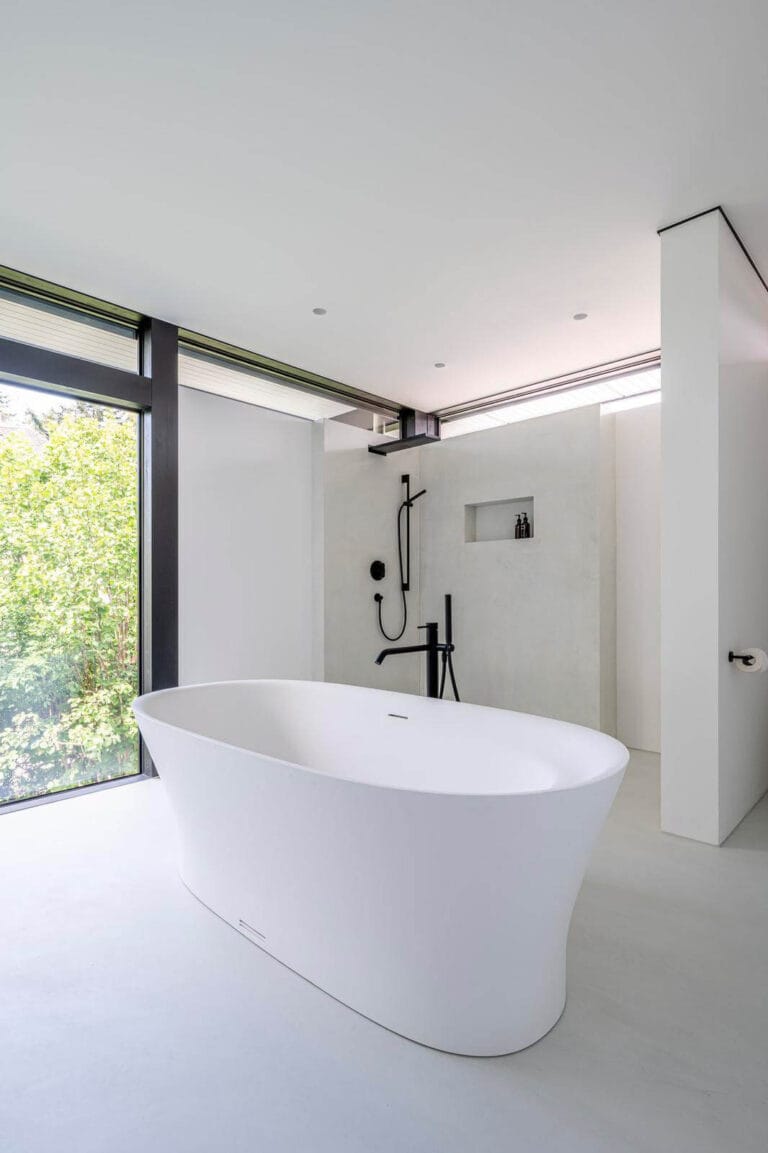
Side by side
Both go on floors, walls and in bathrooms. The difference is the joints, and what that means for cleaning and renovating.
Seamless
Microcement
- Surface
- One seamless surface
- Cleaning
- Wipes clean, with no grout lines for dirt, mould or mildew to collect in
- Thickness
- About 2–3 mm in total
- Over existing tiles
- Yes, with no demolition, so the room is back in use sooner
- Water resistance
- Depends on the system: ErreLAB goes in showers and direct water; Politura and ErreFast suit bathrooms away from direct water
- Slip resistance
- Politura R9 as standard; ErreLAB Spatolato with Top Clear R10, up to R11–R12 with Top Clear SOL (DIN 51130)
- Time
- Politura and ErreFast 2–3 days, ErreLAB 4–5 days
- Underfloor heating
- Yes. Run new underfloor heating for at least 28 days, then switch it off before starting
Grouted
Tiles
- Surface
- Separate pieces with grout lines
- Cleaning
- Grout lines need cleaning
- Thickness
- Varies by tile and adhesive
- Over existing tiles
- The old tiles usually come off first
- Water resistance
- Depends on the tile and grout
- Slip resistance
- Varies by tile
- Time
- Depends on the room, the tile and the layout, plus any strip-out first
- Underfloor heating
- Yes, with a suitable tile and adhesive
Which microcement should replace tiles in each room?
| Where | What we’d recommend | Good to know |
|---|---|---|
| Showers and wet rooms | ErreLAB | Waterproof at every layer; we also recommend tanking |
| Bathrooms away from direct water | ErreLAB, ErreFast or Politura microcement | Politura microcement has no tile primer, so take tiles off first |
| Over existing tiles | ErreLAB | Tiles must be well bonded and properly prepared |
| Kitchen floors and worktops | ErreLAB indoor systems | Includes Spatolato, Velato, Pietra Continua, Metallo Continuo and ErreFast |
| Shops, hotels and restaurants | ErreFast or ErreLAB | See the commercial guide for slip and fire data |
| Outdoors | Spatolato Outdoor or Pietra Continua Outdoor | Only the Outdoor versions go outside |
Which lasts longer, microcement or tiles?
Both can last for many years when they’re done properly, and our team has worked with microcement since the early 90s.
What decides it is the work you can’t see: a sound background, careful preparation, the right system for the room, the right sealer, and the right care afterwards. ErreLAB’s epoxy resins are extremely hard wearing and stain resistant, which is why we recommend them for the hardest-working rooms.
Does mould grow on microcement?
Grout lines are where mould usually takes hold on a tiled wall, and microcement doesn’t have any, so there’s far less for it to cling to. Mould can still form on any surface in a damp, badly ventilated room, so a working extractor fan and a regular wipe down still matter. In showers and wet rooms, choose ErreLAB, which is waterproof at every layer.
What to get right with microcement
Microcement gives its best when it’s done properly. Here’s what matters most, and how to get each one right.
Tile-free bathrooms and floors
6 photos
Showers, bathrooms and floors finished in microcement, with no grout lines.
Looking after it
Questions about microcement and tiles
Can microcement go over my existing tiles?
Yes, with ErreLAB, on walls and floors, if the tiles are well bonded. They need deep cleaning and sanding, lippage levelled, joints filled, and carbon fibre or mesh in the base coat so the joints don’t show through. Politura has no tile primer of its own, so with Politura we recommend taking tiles off. See microcement over tiles.
Will the grout lines show through?
Not if the joints are filled, the surface is levelled and carbon fibre or mesh goes into the base coat.
Is microcement OK in a shower?
ErreLAB is, including direct water, and we also recommend tanking. Politura and ErreFast suit bathrooms but not direct water.
Is it as hard wearing as tiles?
Yes. ErreLAB’s epoxy resins are extremely hard wearing and stain resistant, and Spatolato is tested to R10 slip resistance with Top Clear, up to R11–R12 with Top Clear SOL (DIN 51130).
Does it work with underfloor heating?
Yes. Run new underfloor heating for at least 28 days, then switch it off before starting.
Which should I choose?
For showers, wet rooms or covering tiles, choose ErreLAB. For a traditional mineral finish in a bathroom away from direct water, choose Politura. Call our technical team on 01472 240 340 to talk it through.
Is microcement cheaper than tiling?
Usually not. Microcement is usually more expensive than a standard tile, though going over existing tiles can save the cost of stripping them out. The price depends on the system, the size of the space and the surface underneath. Ask us for a price for your project.
Does mould grow on microcement?
There are no grout lines for mould to take hold in, so there’s far less for it to cling to. Good ventilation and regular wiping still matter in any bathroom.
How long does microcement last?
Many years when it’s prepared, applied and sealed properly.
Can I do microcement myself?
It’s a skilled, hand-applied finish, so it takes practice. Our applying guide explains who it suits and which system is easiest to learn, and our training courses are hands-on.
Videos
Mrs Microcement answers the questions we’re asked most.
More guides

Floors
What to know about microcement floors, from substrates to sealers.
Read the floors guide →
Walls
Feature walls, kitchens and living spaces, and how to prepare the background.
Read the walls guide →
Bathrooms and wet rooms
Which systems work in showers, wet rooms and on vanity tops.
Read the bathrooms guide →
Commercial spaces
Slip, fire and hygiene data for shops, hotels, restaurants and clinics.
Read the commercial guide →
Over tiles
Cover tiled walls and floors without ripping them out, and the preparation that makes it last.
Read the over tiles guide →
Outdoors
Patios, terraces, balconies and pool surrounds in UV-stable ErreLAB resin.
Read the outdoors guide →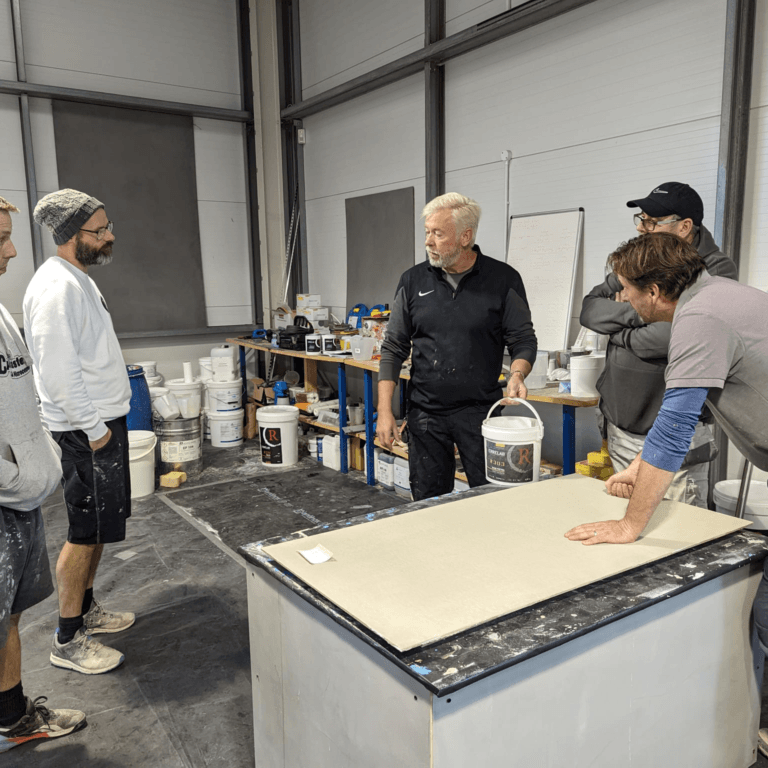
Applying microcement
Who it suits, which system is easiest to learn, and how to get good at it.
Read the guide →
Microcement vs micro concrete
They sound alike but aren’t the same. The difference is thickness.
Read the guide →
Microcement vs polished concrete
A similar seamless concrete style, without pouring a new slab.
Read the guide →
Compare the systems
Politura, ErreFast and ErreLAB side by side: water resistance, speed and where each can go.
Compare them →Say goodbye to grout lines
Tell us about the space and we’ll recommend the right system, send samples and give you a price.